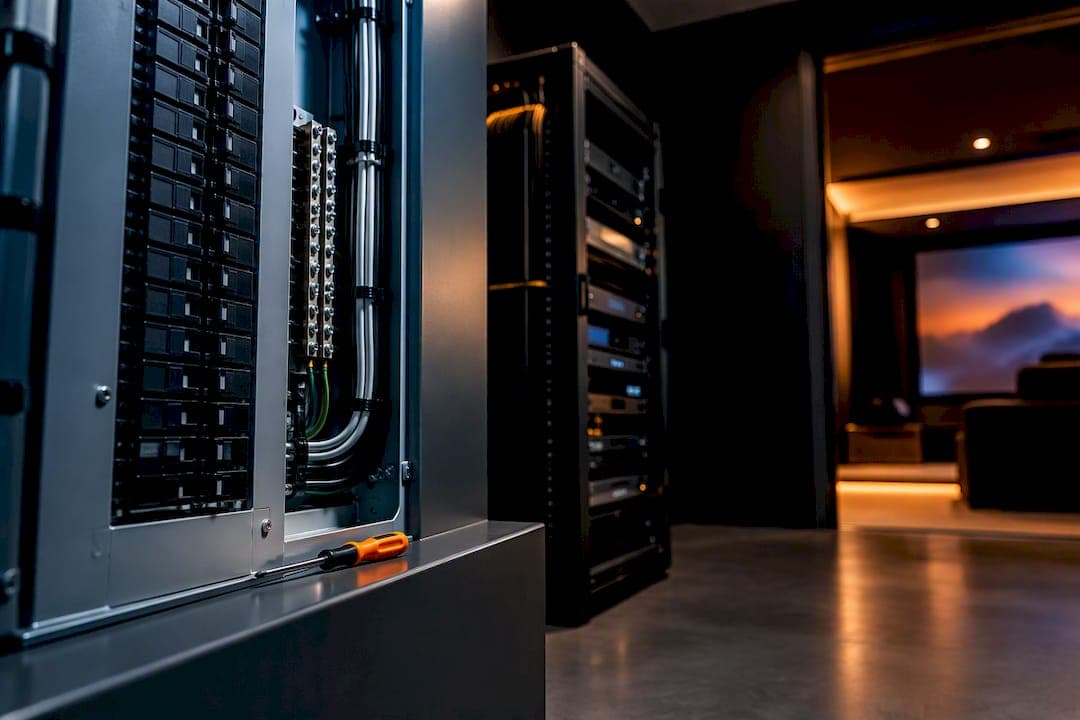
The best defence is layered: a Type 1/2 surge protective device (SPD) at your electrical panel, paired with a point-of-use AV-rated surge suppressor rated at least 1,000 joules, 2,000+ for a high-end theatre rack. Every device you plug it into needs a recognized certification mark. Skip either layer and you're leaving your receiver, TV, or amp exposed to the surges that actually cause damage.
TL;DR:
- A two-layer surge protection system is essential, with a panel device handling external lightning and utility surges, and point-of-use protectors managing internal spikes from household appliances.
- For sensitive AV gear, a surge protector should have at least 1,000 joules rating, with 2,000+ joules recommended for comprehensive home theater setups.
- Proper installation requires mounting protectors close to equipment, verifying grounding, and avoiding daisy-chaining units to ensure full coverage.
- Surge protectors must have full-mode protection, low clamping voltage, and clear status indicators to guarantee ongoing effectiveness.
- Replace surge protectors immediately when the protected indicator goes dark or after a significant lightning or storm event, to maintain optimal safety.
Table of Contents
- Why surge protection for AV needs two layers, not one
- Choosing a surge protector for AV: exact specs and features to prioritize
- Installing point-of-use surge protectors the right way
- How to tell if your surge protector still works
- What to do during a lightning storm or utility work
- An installer's perspective on AV surge protection
- How JupiterAV can help protect your home theatre
- Primary standards and safety resources
- Sources
- FAQ
Why surge protection for AV needs two layers, not one
Most people assume one big surge protector at the panel handles everything. It doesn't, and the reason comes down to where surges actually start.
A whole-home SPD, installed by an electrician at your service panel, is built to handle large external events: a lightning strike nearby, a utility switching fault, a transformer hiccup down the street. It's your first line of defence and it protects your entire electrical system, not just your equipment rack.
But most surges originate inside the house, and a significant majority, according to industry estimates. Your fridge compressor kicking on, an HVAC blower cycling, a garage door motor starting up. These create smaller, repeated spikes that a panel SPD may never even register, but that hit your receiver or projector dozens of times a week.
That's why point-of-use protection at the rack matters even when a whole-home SPD is already installed:
- Panel SPDs absorb the big external hits before they enter your wiring.
- Point-of-use devices catch the residual energy and the internal micro-spikes the panel never sees.
- Together they reduce both the frequency and the severity of what reaches your AV gear.
- Neither layer alone covers the full threat profile a home theatre actually faces.
Think of it as a two-stage filter. The panel takes the blunt force out of a surge; the rack device cleans up what's left.
Choosing a surge protector for AV: exact specs and features to prioritize
Not every "surge protector" sold at a hardware store belongs anywhere near a $4,000 receiver. Here's what actually separates a real AV protector from a glorified power bar.
- Joule rating. Industry guidance points to 1,000 joules as the practical minimum for sensitive AV and computer gear, with 2,000+ joules recommended for a full home theatre rack or anything with a projector, processor, and multiple amplifiers on one circuit. Joules measure absorption capacity, not a guarantee. A higher rating means the device can absorb more cumulative small spikes over its life, not that it will survive a direct lightning strike.
- Clamping voltage (VPR). This is the voltage that actually reaches your equipment once the protector kicks in. Lower is better. A device clamping at 330V is doing noticeably more work than one clamping at 500V, even if both carry the same joule rating.
- Modes of protection. A proper AV protector guards line to neutral, line to ground, and neutral to ground (L-N, L-G, N-G). Cheap strips often only cover one mode, leaving "sneak paths" wide open.
- Protected ports. Coax, ethernet, and phone lines carry surges too, particularly from lightning travelling through cable infrastructure. If your setup has a satellite dish, cable modem, or long ethernet run to a rack, look for a unit with appropriate protective ports included.
- Non-sacrificial design and status indicators. Sacrificial MOV-based protectors wear out silently. Better units include auto-shutdown or clear status lights that tell you the moment protection is spent, a detail reviewers consistently flag as a must-have feature.
- Certification. In Canada, anything that plugs into an outlet, including surge protectors, must carry a recognized certification mark such as CSA. Uncertified units have shown up in Health Canada compliance sweeps for exaggerated or false labelling claims. If the joule number and certification mark aren't printed clearly on the box, walk away.
Pro Tip: A 2,000+ joule protector on a circuit shared with a fridge or space heater will burn through its capacity faster than the same unit on a dedicated AV circuit. If you're serious about protection, ask your electrician about running a dedicated line to the theatre room.
If you're also running a network rack alongside your AV gear, sizing a UPS for your home network is worth doing at the same time, since surges and outages tend to hit both systems together.
Installing point-of-use surge protectors the right way
Placement matters almost as much as the device itself. A great protector mounted badly still leaves gaps in coverage.
- Mount the unit directly at the rack or in a low-profile backbox behind the TV, keeping cable runs short and coax shielding intact.
- Have an electrician confirm the outlet is properly grounded before you rely on any point-of-use device. A three-prong outlet with no actual ground behind it renders surge protection almost useless.
- Never daisy-chain protectors or plug one surge strip into another. This overloads the sacrificial components and can trip breakers or create fire risk.
- Protect coax and antenna lines too. Cable-line protectors installed where the line enters the home, and bonded to the same ground as your electrical service, close a gap that power-only protection leaves wide open.
If you're planning a build from scratch, this is exactly the kind of thing to sort out before drywall goes up, alongside the rest of a proper prewire checklist.
How to tell if your surge protector still works
A surge protector that looks fine can be dead inside. Sacrificial MOV components absorb energy silently, and many units keep passing power even after their protection is completely used up.
- Check the status light. If the "protected" indicator goes dark, replace the unit immediately, even if outlets still power your gear.
- Retire anything showing heat discoloration, a burning smell, a cracked casing, or a frayed cord on sight.
- After a major storm or a lightning strike near your home, do a visual inspection and lean toward replacement rather than assuming the unit absorbed the hit cleanly.
- Check manufacturer guidance on service life. Most home AV protectors are rated for years of use, not decades, and warranty terms often specify replacement intervals.
What to do during a lightning storm or utility work
Direct lightning strikes can exceed what any consumer-grade device is built to absorb. During a severe storm, unplug your highest-value components rather than trust the protector alone.

Shut equipment down in order: amplifiers and receivers first, then source devices, to avoid the power-cycling clicks that can stress speaker protection circuits. If you've seen a visible strike nearby or noticed panel damage, call a licensed electrician before reconnecting anything.
An installer's perspective on AV surge protection
On most job sites, the decision to recommend both a panel SPD and rack-level protection isn't theoretical. It's a risk calculation based on what's already wrong with the electrical system before we even talk about the theatre gear.

The issues we see most often: missing or degraded grounds, circuits already overloaded before the AV rack gets added, and outlets that look fine but test poorly. A proper inspection covers ground testing, a panel assessment, and coordination between the electrical protection and any coax or ethernet lines feeding the rack. Skipping that coordination is how you end up with a $2,000 protector doing half its job.
The trade-off homeowners underestimate is cost versus consequence. A whole-home SPD plus a quality rack protector runs a fraction of what a single damaged 4K projector or AV receiver costs to replace. That math rarely fails to make the case on its own.
— JupiterAV
How JupiterAV can help protect your home theatre
JupiterAV coordinates both layers of AV surge protection so you're not left guessing which device does what. An on-site assessment covers your panel, your outlets, and your rack, then we work directly with electricians when a whole-home SPD needs to go in alongside rack-level suppression.

A visit typically includes a ground and outlet inspection, a certification check on any existing protection you already own, and a straightforward quote for what's missing, whether that's immersive sound and cinema hardware needing protection or a full smart, effortless living setup with a rack full of networking gear. Cable management and coax line protection get handled as part of the same visit, not as an afterthought. If your theatre room, security system, or whole-home audio setup has never had a proper electrical review, book a site visit with JupiterAV and get a clear answer on what your setup actually needs before the next storm season does the deciding for you.
Primary standards and safety resources
For deeper reading on specification standards and Canadian compliance, see Eaton's joule rating guidance, the ESFI surge protection consumer guide, and Health Canada's compliance verification reports on power bars and extension cords. Electrical consultants such as Futuregen also break down the whole-home versus point-of-use distinction in more technical detail.
Sources
- How many joules does my surge protector need? — Eaton
- Surge protection – Keeping your electronics and home safe — ESFI
- Guidance on USB charger hazards and applicable standards — Health Canada
FAQ
What is the best surge protector for AV equipment?
The best option combines a whole-home SPD at your electrical panel with a point-of-use unit rated at 1,000 joules minimum, 2,000+ for high-end setups. Look for full-mode protection, low clamping voltage, and a recognized certification mark rather than judging a unit on joules alone.
Do I really need a surge protector for my TV?
Yes. Most surges that damage electronics happen inside the home, not from lightning, and a modern TV's processing board is exactly the kind of sensitive component that fails first. Skipping protection to save a small amount on a power bar is a poor trade against costly AV equipment.
Which is better, an AVR or a surge protector?
They do different jobs and neither replaces the other. An AV receiver (AVR) manages audio and video signal switching, while a surge protector absorbs electrical spikes before they reach the receiver or anything connected to it, so a home theatre setup needs both.
How big a surge protector do I need for a TV?
A single TV on its own circuit is reasonably covered by a unit rated around 1,000 joules with a recognized certification mark. If that TV shares a circuit with a soundbar, streaming box, or gaming console, moving up toward 2,000 joules gives you more headroom against cumulative internal spikes.
How do I know when my surge protector needs replacing?
Watch the status light. Once the "protected" indicator goes dark, the unit's sacrificial components are spent even though outlets may still supply power. Replace immediately after that signal, after visible heat or corrosion damage, or after a major storm event near your home.