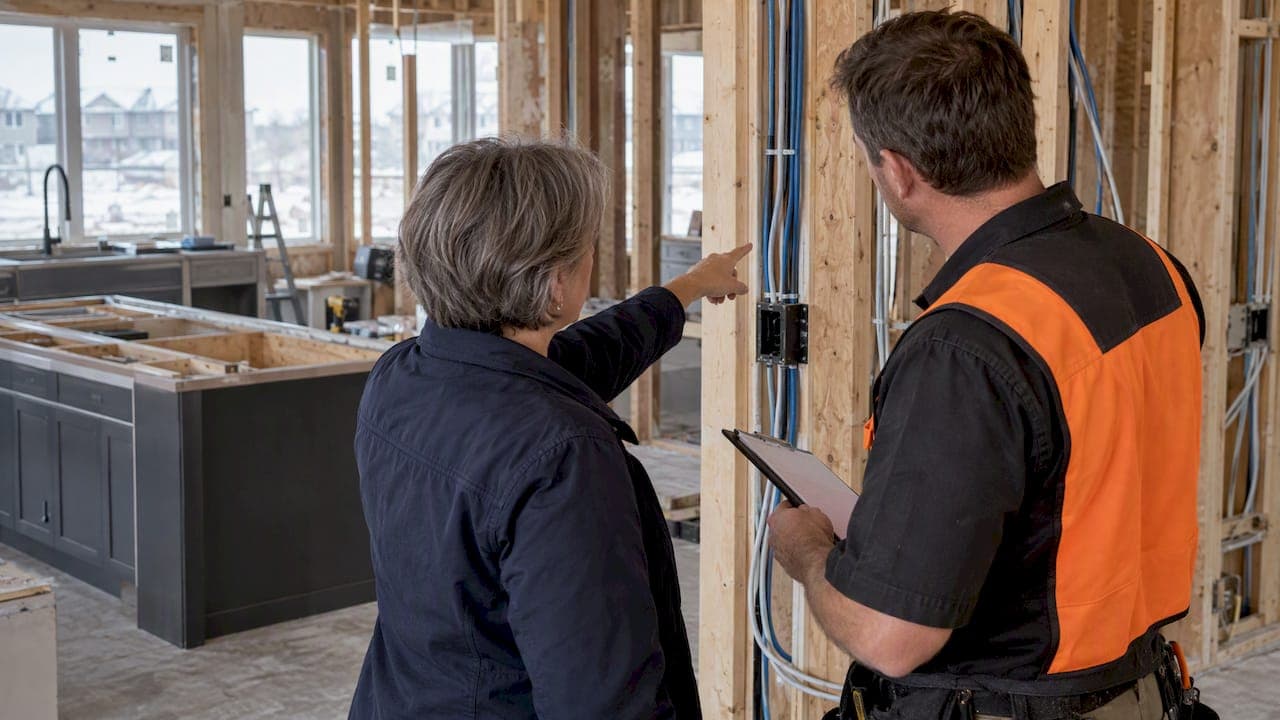
A small single-room prewire in Calgary typically runs a few hundred dollars, a mid-size multi-room job lands in the low thousands, and a full custom-home structured wiring package can reach well into five figures. Per run, expect pricing shaped by labour billed at Calgary's typical electrician hourly rates, roughly $84 to $189 per hour with an average near $126. Get two or three itemised quotes and confirm who is handling permits before you sign anything.
TL;DR:
- Most Calgary prewires cost a few hundred dollars for single rooms and can reach low thousands for multi-room setups, depending on scope and access conditions.
- Labour bills are the main cost driver, with electrician rates averaging around $126 per hour, while materials like cable and conduit add significant expenses based on home size and complexity.
- Bundled quotes may hide the true cost per run, so requesting a line-item breakdown ensures accurate comparison and budgeting.
- Open framing during new builds significantly reduces wiring costs compared to finished drywall, which requires more labor for fishing and patching cables.
- Confirm which low-voltage work requires permits and ensure costs and responsibilities are clearly specified before signing any contract.
Table of Contents
- Detailed cost models: per run, per port, hourly labour and materials
- Sample project estimates mapped to Calgary home sizes and scopes
- What increases or lowers price: key cost drivers and red flags in quotes
- Permits and code: Calgary rules that affect cost and timing
- How to request and compare quotes: a short checklist for Calgary homeowners and builders
- JupiterAV proof: builder prewire checklist and practical tips
- Final advice for Calgary readers
- JupiterAV services and how to get a Calgary prewire quote
- Sources
- FAQ
Detailed cost models: per run, per port, hourly labour and materials
Most Calgary installers price prewire work one of two ways: per run (sometimes per port) or by the hour plus materials. A "run" usually means one cable pulled from a central point to one outlet location, whether that is a Cat6 data jack, a coax line, an HDMI run behind a wall-mounted TV, or a speaker wire pair for in-ceiling audio. Control wiring for things like motorized blinds or lighting keypads is often priced similarly, since the labour of fishing a cable through framing or finished walls is the main cost driver either way; see our guide on how to compare smart home hubs for advice on choosing control wiring and central hub systems.

Labour is the bulk of the bill. General electricians in Calgary bill in the range tracked by CostCanada, while dedicated low-voltage specialists sometimes structure pricing differently, charging per outlet or per project instead of a straight hourly rate, since their work centres on cable management and signal quality rather than power distribution.
Materials add up faster than people expect:
- Cable itself (Cat6, Cat6A, coax, speaker wire) is inexpensive per foot but multiplies across a whole-home run count.
- Wall plates, low-voltage mounting boxes, and keystone jacks are small individual costs that still appear on every line item.
- A patch panel and basic rack hardware are a one-time cost for the central hub, not a per-room charge.
- Conduit adds cost whenever cable needs to pass through fire-rated walls, concrete, or tight mechanical spaces, since it requires extra labour to install properly.
Bundled quotes (a flat price for "whole-home prewire") can hide how many runs are actually included, while line-item quotes let you compare unit costs directly. Ask for a line-item breakdown even if the installer prefers to quote a bundled number, so you can see what you are actually paying per run.
Sample project estimates mapped to Calgary home sizes and scopes
These are illustrative examples to help you map a scope to a budget, not quoted prices from any specific job.
- Single TV and data prewire, pre-drywall: one HDMI or power run behind a wall-mounted television plus two Cat6 data drops, done while framing is open. A job like this, with no drywall repair needed and basic continuity testing included, tends to fall at the lower end of the per-run cost range, often a few hundred dollars total.
- Small multi-room data and speaker package (3 to 6 rooms): a typical scope might include six Cat6 runs, four speaker runs for a couple of rooms, and one coax drop, all pulled before drywall closes. With labour billed hourly and basic labelling included, a job like this commonly lands in the low thousands once materials and testing are added.
- Large custom home structured wiring (whole-home AV and networking): a new build with twenty or more data runs, speaker wiring across several rooms, multiple TV locations, and a dedicated network rack can push total labour and materials toward the higher end of what a full home rewiring project in the Calgary area costs, since that project type reflects comparable scope and labour intensity even though it covers power wiring rather than low-voltage runs.
Each estimate assumes open framing access (no drywall repair), standard Cat6 rather than Cat6A, and basic testing and labelling included in the base price. Add a premium if any of those assumptions do not hold for your project.
What increases or lowers price: key cost drivers and red flags in quotes
Several factors push a quote up or down before a single cable gets pulled.
- Wall and access conditions: open framing on a new build is far cheaper to wire than finished drywall, where every run means fishing cable or cutting and patching.
- Multiple floors and attic or garage access: runs that cross floors or require crawling through tight attic space take longer and cost more per run.
- Future-proofing choices: upgrading to Cat6A over standard Cat6 costs more per run, and adding spare runs during rough-in costs little compared with retrofitting the same run later.
- Conduit installation: running conduit for future flexibility or code compliance adds labour time but can save money on the next upgrade.
- Labour logistics: travel time, after-hours scheduling, or coordinating around other trades on an active build site all affect the hourly rate you effectively pay.
Watch for a few warning signs in any quote. A vague scope that does not list runs by type and destination makes it impossible to compare against another bid. Missing testing (no mention of signal verification or continuity checks) means problems surface after the walls close. No labelling plan leaves you troubleshooting blind in five years. And any contractor who is unclear about who pulls permits is a contractor you should question further.
Pro Tip: Ask every bidder to quote the same defined scope, run for run, so you are comparing prices on identical work rather than comparing two different jobs.
Permits and code: Calgary rules that affect cost and timing
The City of Calgary requires permits and Safety Codes Officer inspections for electrical work, and that applies to certain low-voltage installations tied to your electrical system, not just full rewiring jobs. Confirm with your installer which parts of your scope trigger a permit requirement before work starts.
- Permit fees are a separate line item and should appear explicitly in your quote, not buried in the labour total.
- Homeowner permit application fees are published on the City's trades and permit fee schedules and are worth checking before budgeting.
- If your project involves a service upgrade or requires a load calculation, factor in additional time and cost beyond the low-voltage work itself.
- Confirm in writing who is responsible for pulling the permit (you or the contractor) and make sure inspection fees are included in the written quote, not added later.
How to request and compare quotes: a short checklist for Calgary homeowners and builders
A clear scope document is the single best tool for getting comparable quotes.
- List every run by type (Cat6, coax, HDMI, speaker, control) and its destination room, so every bidder is pricing the same job.
- Specify the termination standard you expect (keystone jacks, patch panel, labelled wall plates) and whether testing is included.
- Ask directly about permits, insurance coverage, warranty terms, and the expected project timeline from quote to completion.
- Compare bids on unit cost per run rather than the bottom-line total alone, and ask how each contractor handles change orders if scope shifts mid-project.
- Request as-built documentation and a labelled punchlist at closeout, so you know exactly what was installed and where.
A prewire checklist built around these categories makes it much easier to hold every bidder to the same standard.
JupiterAV proof: builder prewire checklist and practical tips
JupiterAV's Builder Prewire Checklist helps Calgary homeowners and builders plan runs before drywall closes, when adding a cable costs a fraction of a later retrofit.
- Place the central network hub in a cool, accessible location near the main electrical panel to simplify grounding and future equipment additions.
- Label every run at both ends during installation, not after, so troubleshooting later takes minutes instead of hours.
- Include signal testing in the original scope rather than treating it as an add-on.
- Add a few spare runs during rough-in since the incremental cost is small compared with opening a wall later.
Final advice for Calgary readers
If you take one thing from this guide, prewire before drywall closes. It is cheaper, faster, and gives you more flexibility later. Use a written checklist and get local quotes before committing.
— JupiterAV
JupiterAV services and how to get a Calgary prewire quote
Planning runs for a Calgary build or renovation takes more than a tape measure and a guess. JupiterAV handles low-voltage wiring, smart home networking, and structured prewire for homeowners and builders, backed by a single point of contact from first walkthrough to final testing.

- Low-voltage wiring and whole-home structured cabling for new builds and renovations.
- Smart, Effortless Living packages covering networking, lighting, and control integration.
- Security and CCTV wiring planned alongside your data and AV runs.
Request an on-site estimate or ask for the Builder Prewire Checklist through Jupiterav before your framing closes up.
Sources
- Electrical permits for contractors — City of Calgary
- Cost of Electrician Hourly Rate in Calgary, AB (2026) | CostCanada
- What does whole house rewiring typically cost in the Calgary area? | Calgary Construction Network
FAQ
How much do electricians charge per hour in Calgary?
Calgary electricians typically bill between $84 and $189 per hour, with an average around $126. Low-voltage specialists sometimes price per outlet or per project instead, since their work focuses on signal quality rather than power distribution.
How much would it cost to rewire a 2,000 square foot house?
Whole-house rewiring in the Calgary area commonly falls between $8,000 and $25,000 or more, with typical mid-range projects for 1,200 to 1,800 square foot homes running $12,000 to $18,000.
How much is a low voltage prewire?
A single-room prewire with a few runs often costs a few hundred dollars, while a multi-room package of six or more runs typically lands in the low thousands once materials and testing are included. Whole-home structured wiring for a large custom build costs considerably more, driven mainly by total run count and access conditions.
Do I need a permit for low voltage wiring in Calgary?
Certain low-voltage work tied to your electrical system requires a City of Calgary permit and Safety Codes Officer inspection. Confirm with your installer which parts of your project trigger that requirement and who is responsible for pulling the permit.
What is the difference between an electrician and a low-voltage specialist?
A general electrician typically handles power distribution and higher-voltage circuits, while a low-voltage specialist focuses on signal integrity, cable management, and systems like networking, audio, and security wiring. Many Calgary prewire jobs are better suited to a low-voltage specialist, especially for structured cabling and smart home systems.