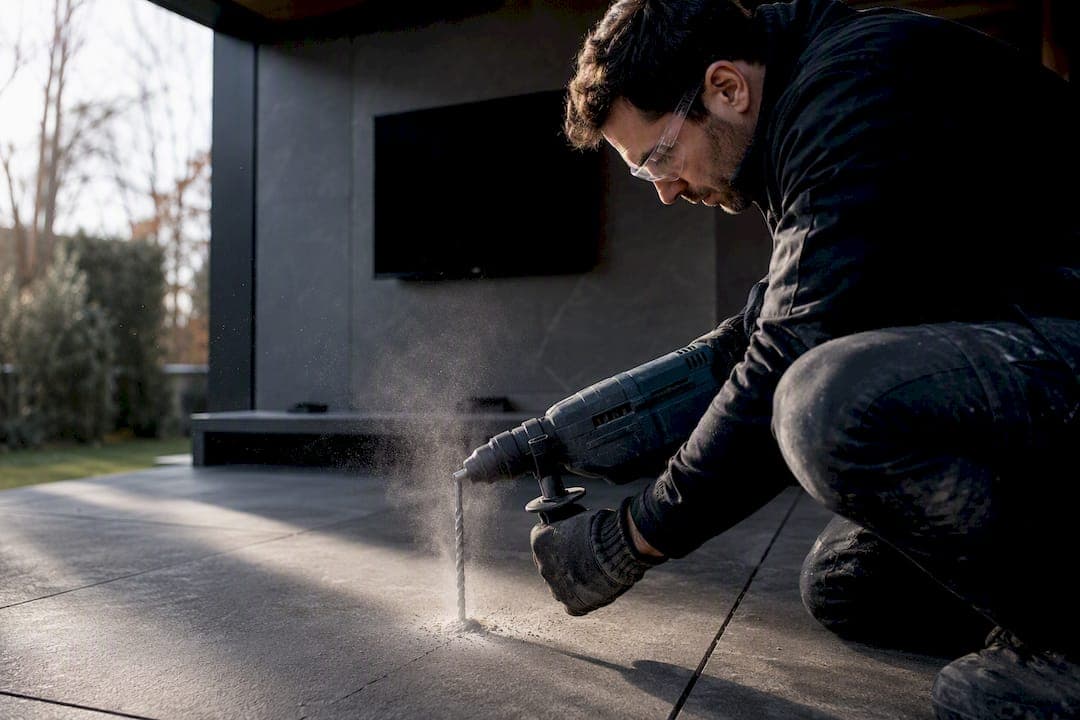
Yes, you can mount a TV on stone safely, but only if the mount's load lands on structural backing, not just the decorative stone itself. Most stacked stone and stone veneer is a decorative skin, not a load-bearing wall. Treat it that way and the install holds for years. Ignore it and you're gambling with a 60-pound screen hanging over your living room.
Here's the priority order, best to worst:
- Best: Lag bolts driven through the stone into studs or solid concrete behind it.
- Also solid: A plywood or steel backer plate anchored into multiple studs, then the mount attached to the plate.
- Acceptable on solid masonry: Heavy-duty sleeve, wedge, or chemical anchors rated for the load, used only on genuine solid stone or concrete.
- Avoid: Relying on mortar joints or thin veneer alone to hold anything.
Pro Tip: A hammer drill with carbide masonry bits isn't optional here, and lag bolts need at least 1.5 inches of penetration into studs once they clear the veneer.
Key Takeaways
Mounting a TV on stone works reliably only when the fastener transfers weight to studs or solid masonry behind the decorative surface, not to the stone alone.
| Point | Details |
|---|---|
| Anchor to structure, not veneer | Lag bolts must clear the stone and reach at least 1.5 inches into studs or concrete. |
| Use a hammer drill only | Percussion drilling with carbide or SDS masonry bits is required; standard drills fail on stone. |
| Skip mortar joints entirely | Mortar is softer than surrounding stone and won't hold sustained TV loads long term. |
| Plan cable and power first | In-wall power needs a rated kit or a licensed electrician, never a standard cord in the cavity. |
| Call JupiterAV for certainty | JupiterAV assesses stone structure, selects fasteners, and coordinates electricians for code-compliant installs. |
Table of Contents
- How to assess your wall before mounting a TV on stone
- Tools and materials for mounting flat screens on stone
- Which anchors work best on different stone surfaces?
- Step-by-step: installing a TV bracket on a stone wall
- Running cables and power safely behind stone
- Fixing common problems in stone TV installs
- When to call a professional installer instead
- Let a professional handle your stone or fireplace TV mount
- Recommended reading for stone and masonry mounting
- Frequently asked questions about mounting a TV on stone
- Sources
How to assess your wall before mounting a TV on stone
Before you touch a drill, figure out what's actually behind that stone. Stacked stone and manufactured veneer panels are usually installed over a wood-framed wall with studs spaced 16 or 24 inches apart, exactly like drywall. Solid natural stone or a real masonry wall is a different animal entirely, often with no studs at all behind it.
A stud finder alone will lie to you on stone. The density and mineral content in veneer and mortar confuses magnetic and radar sensors. A better approach is a small pilot hole, drilled at a spot you'll cover with the mount plate, to physically confirm what's behind the surface. Some installers also tap the surface and listen for a hollow versus solid sound to narrow down where the studs likely sit before committing to a full-size hole.
If you're mounting above a fireplace, a few extra rules apply. Keep clearance from the firebox opening per your fireplace manufacturer's specs, and never drill anywhere near the flue. Sit down at your normal viewing spot and check the angle before you finalize height. TVs mounted too high above a mantel cause chronic neck strain, and it's one of the most common regrets homeowners report after a DIY fireplace install. If ergonomics matter to you, our guide to TV mounting height walks through the math for different room layouts.
Your decision tree from here is simple. If studs line up with your mount's bolt pattern, anchor through the stone straight into them. If they don't line up, or the wall is studless behind the veneer, plan on a backing plate spanning multiple studs. If you're dealing with solid masonry and no framing at all, you're in sleeve-anchor or chemical-anchor territory.
Before you buy anything, gather these numbers: TV weight, VESA hole pattern, the mount's rated capacity, stone thickness, stud depth, distance from the fireplace opening, and your planned cable path. If in-wall power is part of the plan, that's a job for a licensed electrician, not a weekend project.
Tools and materials for mounting flat screens on stone
You need masonry-specific gear here, not your average home toolbox. A hammer drill with percussion action is mandatory for stone; a standard drill will burn out or barely scratch the surface. Pair it with SDS or carbide-tipped masonry bits, a torque wrench or socket set, a level, a stud finder, and a vacuum for dust extraction. Safety glasses, ear protection, and a dust mask aren't optional extras when you're grinding through mineral surfaces for twenty minutes at a stretch.
On the fastener side, stock up on:
- Long lag bolts, sized to clear the stone thickness plus at least 1.5 inches into studs.
- Sleeve or wedge anchors and Tapcon concrete screws for solid masonry.
- Chemical anchors for hollow or fractured sections of stone.
- Heavy-duty shims or metal spacers for uneven surfaces.
Pro Tip: Buy a wider range of bit diameters and longer lag bolts than what came in the mount's box. Standard hardware kits assume drywall thickness, and stone veneer plus any cement board backing eats up length fast. For premium rough-cut panels up to about 3.5 centimetres thick, many installers reach for 4 to 5-inch lag bolts to guarantee they clear the veneer and still hit the stud with proper penetration.
Which anchors work best on different stone surfaces?
The right anchor depends entirely on what's directly behind the stone face, and getting this wrong is the single biggest cause of failed installs.
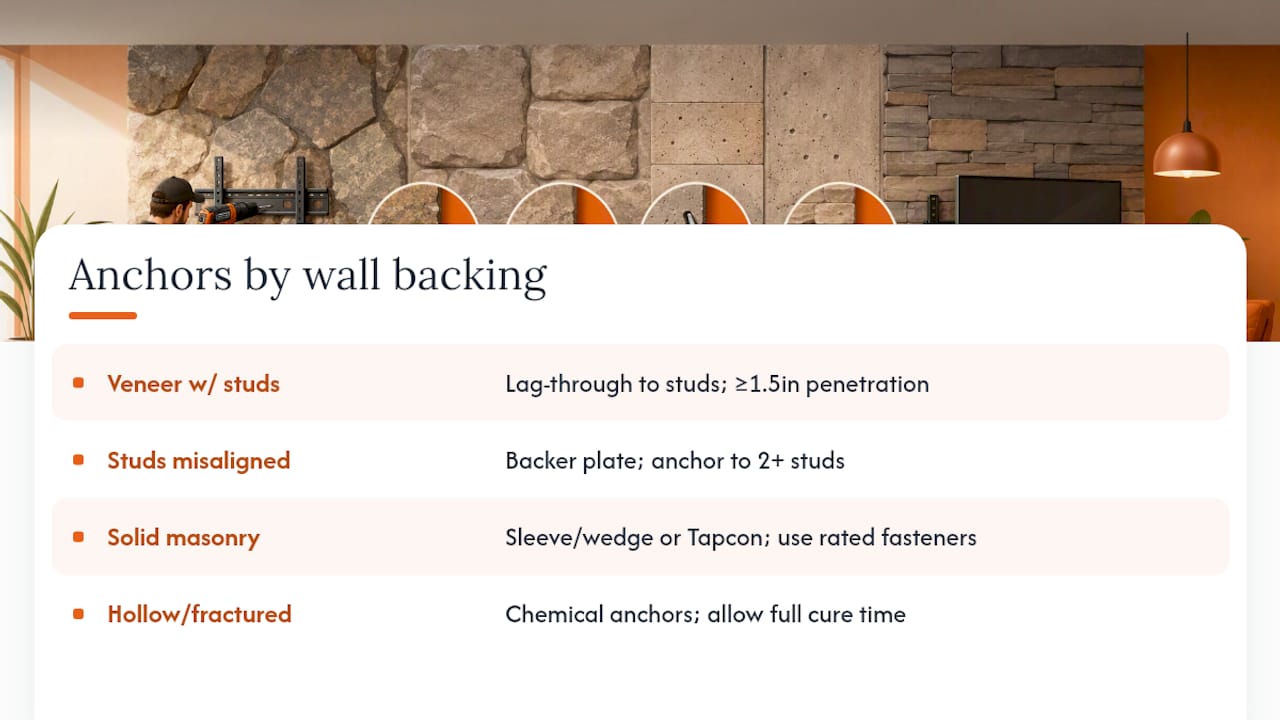
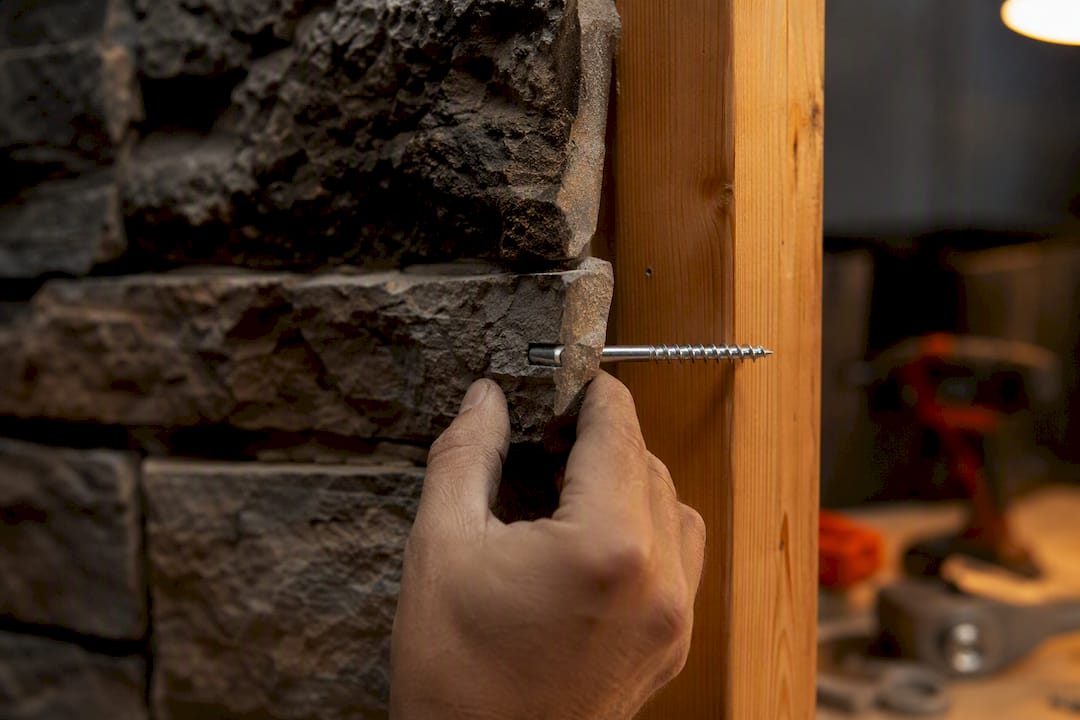
Lag-through-stone into studs is the gold standard when you can locate framing behind veneer. It handles large screens and heavy full-motion mounts because the load transfers straight to the house's structural frame, with a minimum 1.5-inch stud penetration required for a secure hold.
Plywood or steel backer plates solve the problem when your mount's bolt pattern doesn't line up with available studs. You anchor the plate into two or more studs first, then bolt the TV mount to the plate itself, spreading the load across a wider area than a single set of lag bolts ever could.
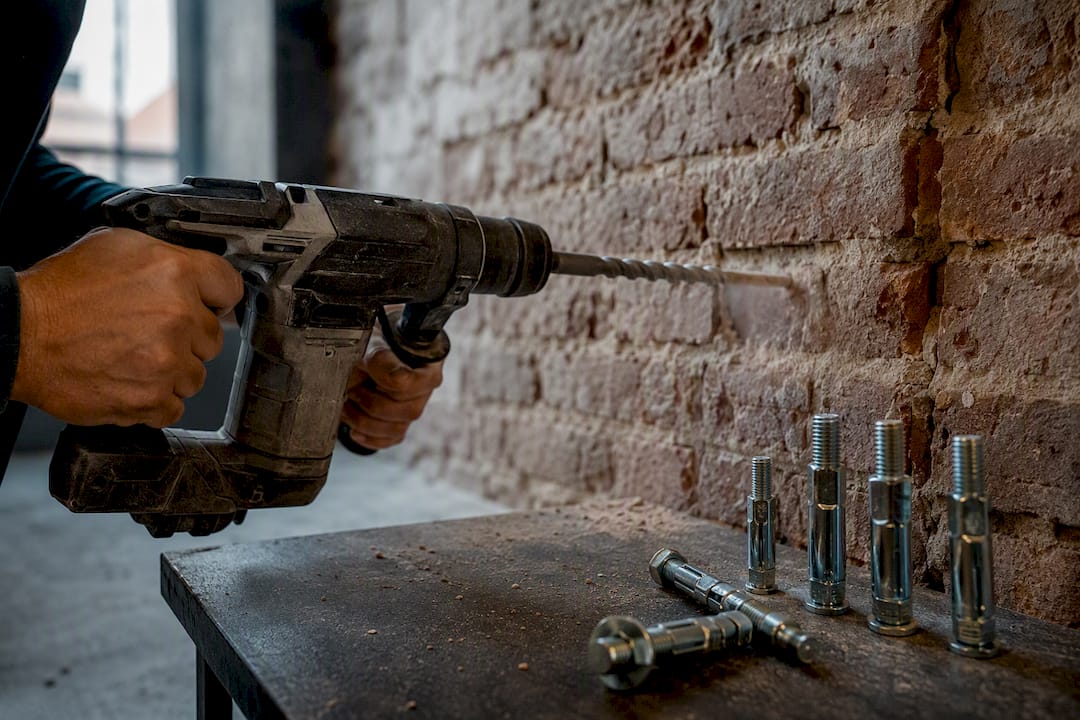
On solid stone or poured concrete, sleeve or wedge anchors and Tapcon screws do the job, provided you choose fasteners rated for the shear and pullout forces involved and build in a conservative safety margin rather than cutting it close to the mount's rated capacity. This same principle applies whether you're working with true stone or a solid brick wall, where drilling directly into the brick face rather than the mortar joints yields anchors that can hold several hundred pounds.
Chemical anchors earn their place when you hit hollow pockets or fractured stone that won't grip a mechanical anchor reliably. They need a full cure time before you load any weight on them, so read the manufacturer's window and respect it.
Whatever you do, don't drill into mortar joints expecting a permanent hold. Mortar is softer than the stone around it and simply wasn't designed to carry sustained dynamic loads like a TV that gets tilted and adjusted repeatedly over the years.
Step-by-step: installing a TV bracket on a stone wall
Here's the full sequence, in order, for a stone or fireplace install done right.
- Pre-install checks. Confirm your TV's actual weight against the mount's rated capacity, verify stud positions, and map your cable run and any electrical needs before you pick up a drill.
- Position and mark. Hold the mount in place, use painter's tape over your marked drill points to reduce chipping, and double-check level and viewing height before committing.
- Pilot drilling. Start with a small bit and step up in stages. On very dense natural stone, a diamond-tipped bit handles the density better, and progressive drilling with intermittent clearing reduces the risk of cracking the surface.
- Drill technique. Keep the bit perpendicular to the surface and drill in short bursts to manage heat buildup, clearing dust with a vacuum or compressed air every few seconds. On dense stone, a brief pause lets the bit cool and cuts down on wear.
- Clean and set anchors. Vacuum every hole thoroughly before inserting anchors, then torque them to the manufacturer's spec. Overtightening is a real risk on stone. It's one of the fastest ways to crack a panel you can't easily replace.
- Attach the wall plate. Torque bolts evenly across the plate rather than cranking one down fully before moving to the next, and recheck plumb and level as you go.
- Hang the TV. Attach the brackets to the TV, lift it with a second person, engage every safety latch, and give it a firm tug test before you let go.
Once it's up, do a final walk-around: check the level, inspect the stone around each anchor point for hairline cracks, and confirm nothing shifts under moderate pressure. Wear eye and ear protection through the whole process, keep dust under control, and stay well clear of any flue. If the stone fractures at any point during drilling, stop immediately. That's your signal to call a professional rather than push forward.
Running cables and power safely behind stone
Cable management is where a lot of otherwise solid DIY installs go sideways. Running a standard, non-rated power cord through a wall cavity behind stone violates most electrical codes and creates a real fire risk. This is a case where following code isn't a suggestion, it's how insurance claims get honoured after the fact.
The safer options are an in-wall rated power kit designed for exactly this use, or a recessed outlet installed behind the TV location paired with a separate in-wall rated low-voltage plate for your HDMI and data cables. New wiring, recessed outlets, or anything involving a permit is a job for a licensed electrician, full stop.
Heat management matters just as much as cable routing on a fireplace install. Placing a TV where a working fireplace can push it past the manufacturer's heat tolerance shortens its life fast, and sometimes the fix is as simple as a mantel shelf or heat deflector between the firebox and the screen.
Pro Tip: Plan every cable run before you drill a single hole. Fish lines with a pull string through conduit or a cable raceway so the finished job looks clean and stays serviceable if you ever need to swap a component.
Fixing common problems in stone TV installs
Even careful installs hit snags. Here's how to handle the ones that come up most often.
- Stone chips or cracks while drilling: stop immediately, clean out the hole, and either move to a slightly larger sleeve anchor or shift the anchor point a few centimetres over. A backing plate can also route around the damaged area entirely.
- Anchor pulls out under test load: swap in longer lag bolts that actually reach the studs, or install a plywood backer plate spanning multiple studs instead of relying on one anchor point.
- Mount won't sit flush on uneven stone: shims or metal spacers close the gap, or switch to an articulating mount that clears high points on split-face or rough-cut panels without grinding the stone down.
- TV hangs out of level: loosen the fasteners, re-seat any shims, and fine-tune the bracket's adjustable hanger bolts. Never force a bolt that isn't seating properly. That's usually a sign something behind the stone isn't where you think it is.
When to call a professional installer instead
Some jobs genuinely call for a pro, and knowing the line saves you from a much bigger repair bill later. Hire one when you can't confirm stud locations, when the stone is fragile, cracked, or badly irregular, or when you're unsure how to calculate the anchor load a specific mount and TV combination actually needs.
Any new recessed outlet, in-wall power relocation, or work that your local code flags as needing a permit goes to a licensed electrician, no exceptions. If you do bring in an installer, check they carry insurance, ask to see examples of past stone or fireplace installs, and confirm what's covered under warranty, both the hardware and their workmanship.
An installer's take on stone mounts
Test everything before final torque. If you're not fully certain the load is landing on studs, switch to a backing plate rather than hoping a single anchor holds. The installers who never get callbacks are the ones who show up with three anchor sizes and a plan B before they drill the first hole.
Let a professional handle your stone or fireplace TV mount
Mounting a TV on stone rewards patience and punishes shortcuts, and that's exactly why so many DIY installs end up as service calls a year later. JupiterAV handles the structural assessment, fastener selection, and code-compliant wiring in one visit, so you're not guessing at anchor loads or hoping the stud finder read the veneer correctly.

Our team brings certified electricians for any in-wall power work, backs installations with a workmanship warranty, and has hung TVs on everything from stacked stone accent walls to full stone fireplace surrounds across Calgary. If your wall has you second-guessing which anchor to trust, book a site visit or request a quote and we'll tell you exactly what your stone can support before anyone drills a hole.
Recommended reading for stone and masonry mounting
A few sources cover the technical side in more depth if you want to double-check your plan before drilling.
- Top Source Stone's guide breaks down bolt length and stud penetration for stacked stone fireplaces.
- Pine Hall Brick explains why drilling the brick face beats drilling mortar.
- MantelMount covers articulating mounts for above-fireplace placement.
Always cross-check anchor choice against the manufacturer's own instructions and your local electrical code before starting any in-wall work.
Frequently asked questions about mounting a TV on stone
Can I mount a TV directly on stacked stone veneer without hitting studs? Not safely for a permanent install. Veneer is decorative, so the mount needs a mechanical bridge, either lag bolts reaching studs behind it or a backer plate, to carry real weight.
What size lag bolts do I need for a stone fireplace TV mount? It depends on stone thickness, but 4 to 5-inch lag bolts are common for panels up to roughly 3.5 centimetres thick, giving enough length to clear the veneer and still reach 1.5 inches into the stud.
Do I need a hammer drill for mounting a TV on stone, or will a regular drill work? You need a hammer drill with percussion action and carbide or SDS masonry bits. A standard rotary drill struggles to penetrate stone and tends to overheat or snap bits.
Is it safe to mount a TV above a working fireplace? Yes, provided you respect the manufacturer's heat clearance guidelines and avoid drilling anywhere near the flue. An articulating or pull-down mount also helps by letting you angle the screen down for comfortable viewing.
How do I know if my stone wall has studs or is solid masonry? A small pilot hole at a spot the mount plate will cover confirms what's actually behind the surface, since stud finders are unreliable on dense veneer and stone.
Sources
- How to Mount a TV on a Stacked Stone Fireplace Safely - Top Source Stone
- How to Mount a TV on a Stone Fireplace Step by Step - LivingRoomy
- Mounting Your TV on Brick or Concrete - GuideSpot
- How to Mount a TV on a Brick Wall (Step-by-Step Guide) - Pine Hall Brick
- Mounting your TV on brick or stone: what you need to know - MantelMount