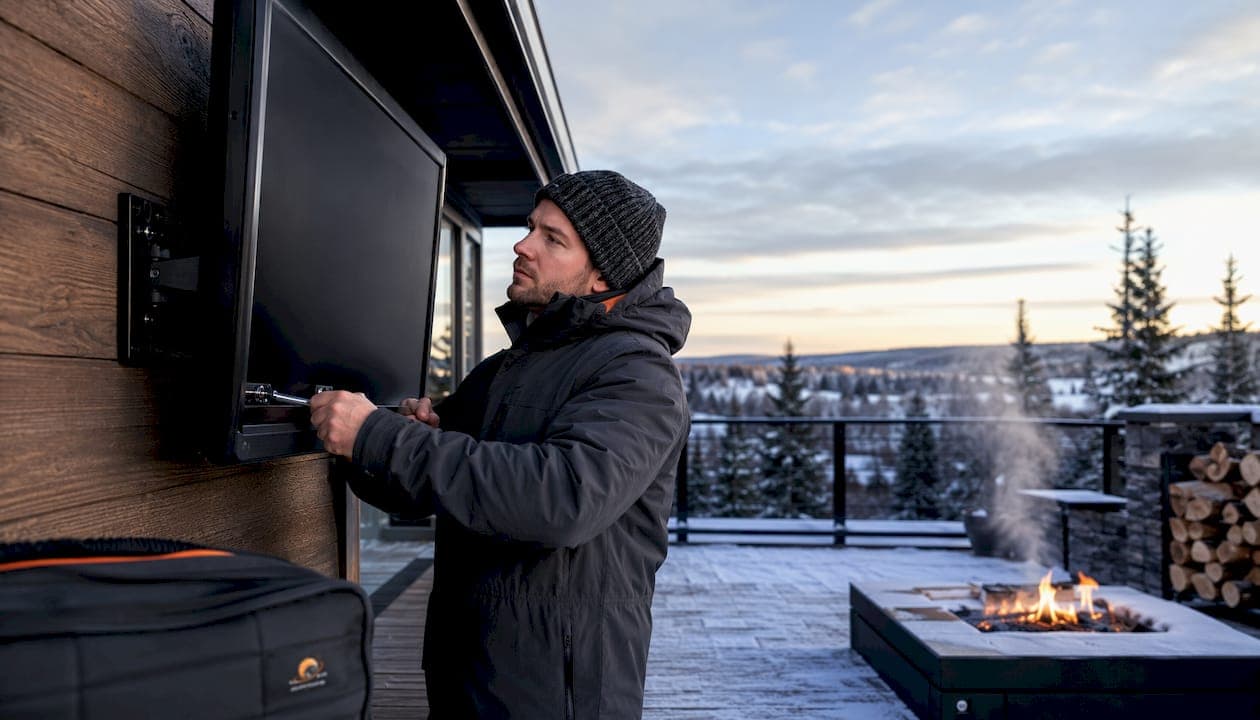
A purpose-built outdoor TV with a published operating temperature that covers your coldest local night is the safest choice. If that isn't feasible, an IP65-rated enclosure with active thermal management is your next-best option. The key distinction most homeowners miss: storage temperature and operating temperature are not the same spec, and confusing them is the fastest way to destroy a panel.
Know your numbers: Standard indoor TVs are rated for typical room temperature ranges and are not designed for extreme cold. Many purpose-built outdoor models list a minimum operating temperature well below freezing, accommodating colder climates than standard indoor units.
Quick orientation before you buy or install:
- Operating temperature = the range in which you can safely power the TV on.
- Storage temperature = how cold the unit can sit unpowered without physical damage.
- A TV rated for storage at −32°C may still crack or short if you power it on at −20°C.
- Leaving a sealed outdoor TV plugged in on standby creates a small internal micro-climate that reduces cold-start risk and condensation.
Table of Contents
- Why your TV cover choice can cause more damage than cold alone
- What warranty and maintenance actually look like in Canada
- What does a cold-climate outdoor TV setup actually cost?
- Questions to ask before hiring a local outdoor TV installer
- Red flags that tell you to walk away
- JupiterAV installs outdoor TVs built for Calgary winters
- Key takeaways
Why your TV cover choice can cause more damage than cold alone
A cover feels like cheap insurance. The wrong one isn't. Non-breathable tarps and solid vinyl covers trap humid air against the screen housing. When temperatures swing overnight, that trapped moisture hits the dew point inside the enclosure and condenses directly onto circuit boards.
Breathable, water-shedding covers allow airflow while blocking precipitation. The same principle applies to your home's exterior: breathable weatherproofing materials prevent moisture from getting trapped where it can cause damage. If you're covering your outdoor TV for the season, choose a cover with filtered ventilation, not a sealed bag.
What warranty and maintenance actually look like in Canada
Most manufacturer warranties on outdoor TVs cover defects, not weather damage caused by improper installation or operation outside the rated temperature range. That distinction matters in Calgary, where a single −35°C night can void a claim if the unit wasn't installed correctly.
Ask your installer for a labour warranty that covers the mount, cabling, and enclosure separately from the panel warranty. Silicone and EPDM gaskets hold up through freeze-thaw cycles; standard PVC gaskets turn brittle after two or three Alberta winters. Schedule a spring inspection each year: check fasteners, gaskets, cable insulation, and surge protection.
What does a cold-climate outdoor TV setup actually cost?
Budget in four layers: the display, the enclosure (if needed), the installation labour, and seasonal maintenance. A purpose-built outdoor TV with cold-weather ratings runs significantly more than an indoor equivalent. An IP65-rated enclosure for a standard TV is a lower upfront cost but adds labour complexity. For a realistic sense of how low-voltage labour is priced in Alberta, the CCTV installation cost guide gives useful regional benchmarks.
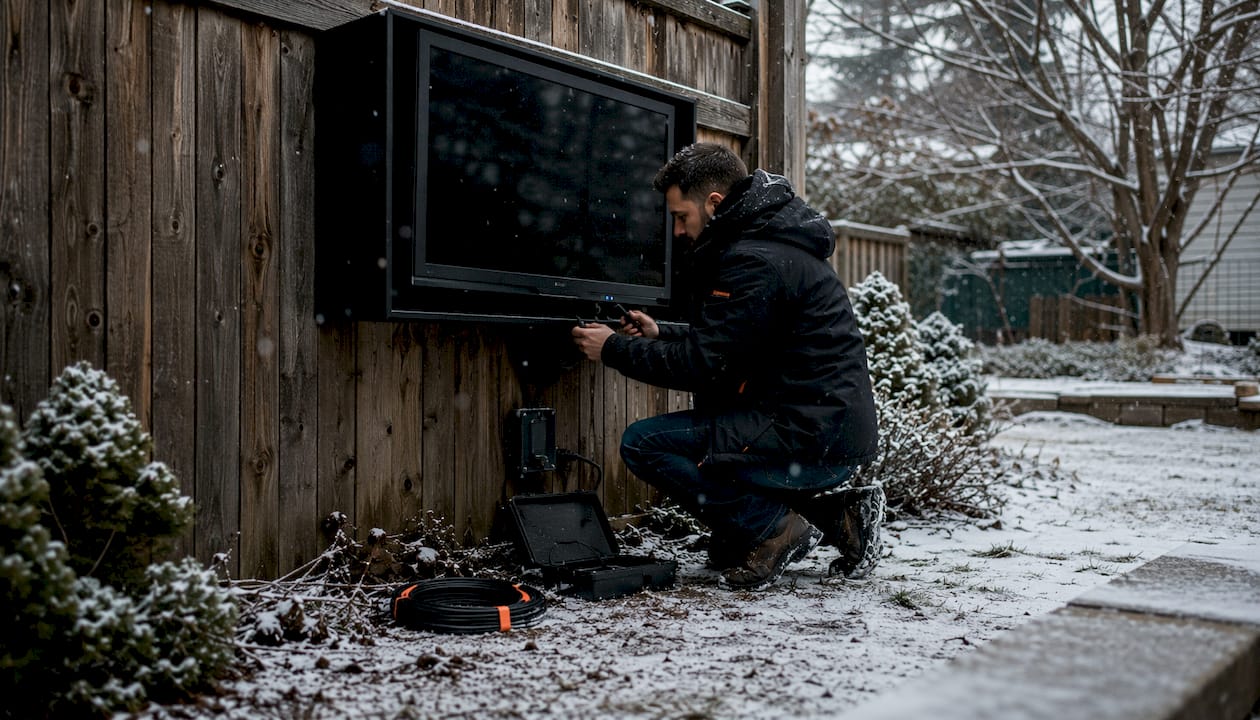
Timing matters too. Book installs in late summer or early fall before the ground freezes and before installer schedules fill. Waiting until October in Calgary often means a spring install instead.
Questions to ask before hiring a local outdoor TV installer
The right installer knows cold-climate specifics, not just general AV work. Ask these before signing anything:
- What is the lowest operating temperature of the unit you're recommending, in writing?
- Does the enclosure or TV include active thermal management (internal heater or thermostatically controlled fan)?
- What IP rating does the enclosure carry, and does it cover the back panel and cable entry points?
- Are you using marine-grade cabling and stainless fasteners, or standard hardware?
- Do you offer a labour warranty that covers the mount and wiring through at least one winter cycle?
- What's your recommended mounting location given my specific patio exposure?
A covered patio dramatically reduces thermal stress compared to a fully exposed south-facing wall. Placement affects both longevity and your TV mounting height decisions.
Red flags that tell you to walk away
Some installers treat outdoor TV work as a standard wall-mount job with a weatherproof sticker on it. Watch for these warning signs:
- They quote a panel without confirming its operating temperature against your local record lows.
- No mention of surge protection on the outdoor circuit.
- They recommend a non-breathable cover or no cover at all.
- The quote uses standard PVC conduit and indoor-rated cables for exterior runs.
- No written labour warranty beyond the manufacturer's panel warranty.
- They've never installed in a Calgary winter and can't name a specific cold-weather failure mode.
JupiterAV installs outdoor TVs built for Calgary winters

JupiterAV handles the full scope: equipment selection, cold-climate installation, enclosure sourcing, and ongoing maintenance for Calgary homeowners. Every quote includes the panel's confirmed operating temperature in writing, IP rating documentation, active thermal management specs, marine-grade cabling, and a labour warranty that covers your first winter. Site surveys are available to assess your patio exposure, recommend the right mounting position, and give you a realistic timeline before the season closes.
Contact JupiterAV to book a site visit and get a written quote before Calgary's install window closes.
Key takeaways
A purpose-built outdoor TV rated to operate safely in cold temperatures typical of Calgary winters is the minimum standard; models with higher minimum operating temperatures require a heated, IP65-rated enclosure.
| Point | Details |
|---|---|
| Operating vs. storage temp | Never power on a TV below its operating limit — storage ratings are not the same as operating ratings. |
| Indoor TV limits | Standard indoor TVs are rated for 0°C to 35°C (32°F to 95°F), and will fail in a Calgary winter without a proper enclosure. |
| Breathable covers only | Non-breathable covers trap humidity and cause condensation damage; always use a vented, water-shedding cover. |
| Cold-weather materials | Specify silicone/EPDM gaskets, stainless fasteners, and marine-grade cabling — PVC cracks after 2–3 Alberta winters. |
| JupiterAV | Provides Calgary outdoor TV sales, cold-climate installation, and written labour warranties covering the first winter. |