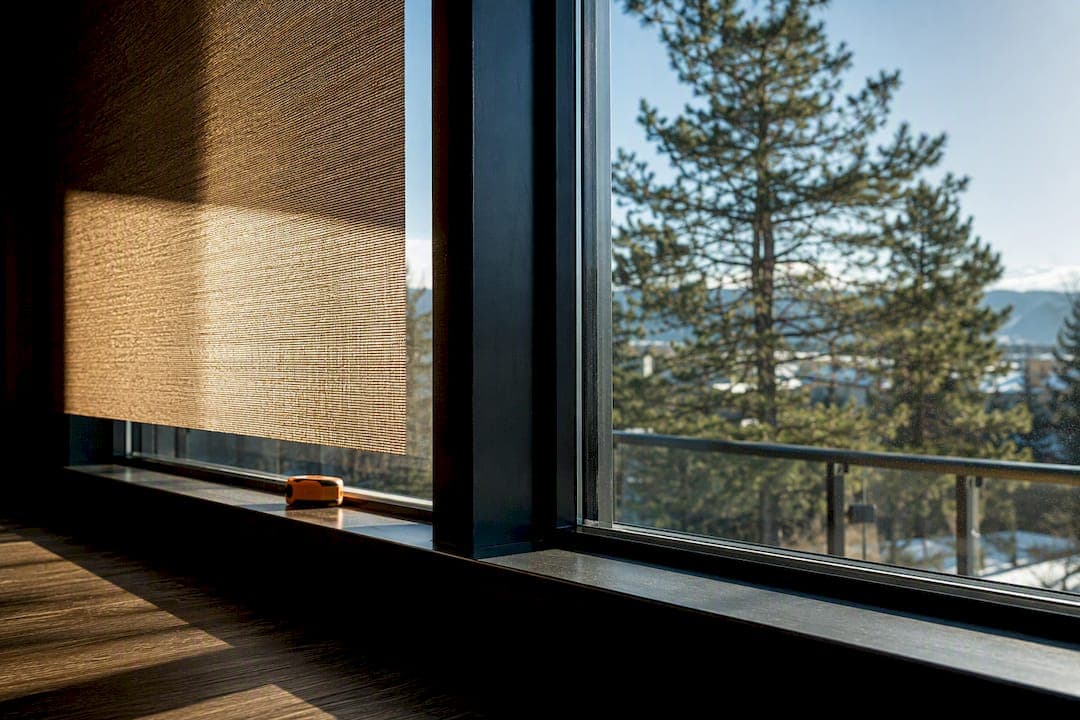
For most south-facing windows, the best fix is a solar shade with a low openness factor, or a high-performance window film if you want to keep the glass completely clear. Add cellular shades or blackout roller shades where privacy or full darkness matters, and motorize whatever you install if the window gets direct sun for more than a few hours a day. Expect to spend a range from basic manual blinds to higher-end motorized, film-backed setups per window.
TL;DR:
- Solar film provides the best heat and glare reduction without sacrificing visibility, especially with a high-performance ceramic or metallized layer for south-facing windows.
- A 1% to 3% openness fabric strikes the right balance between glare control, heat rejection, and still allowing some view outside, but darkens the room considerably.
- Combining film with shades or motorized systems enhances overall performance, effectively addressing both daytime heat and nighttime privacy needs.
- Cost varies significantly with size, fabric quality, and motorization, with custom and premium options nearly doubling basic prices before installation fees.
- Proper installation, including outside mounts and scheduled operation, is crucial for optimal performance and to prevent common issues like light leaks and sagging.
Table of Contents
- Best south facing window blinds and shading options at a glance
- How each treatment actually blocks heat and glare
- Picking fabric, colour and openness factor without guessing
- Getting the mounting and motorization right
- What south facing window blinds actually cost installed
- When combining film and shades beats either one alone
- What installers see homeowners get wrong
- Get a solar-control plan built around your actual windows
- Sources
Best south facing window blinds and shading options at a glance
South-facing rooms get the longest, highest-angle sun exposure of any orientation, and that changes which window covering actually earns its keep. A north-facing room can get away with almost anything. A south-facing one punishes the wrong choice with faded floors, a hot afternoon, and a TV screen you can't see past noon.
Here's how the main options stack up by what they solve:
- Solar shades cut glare and heat while letting you still see outside, especially with a 3% to 5% openness fabric that Blindsgalore recommends as the sweet spot for south exposures.
- Cellular (honeycomb) shades trap air in insulating pockets, which helps in winter as much as summer, according to Sarabella's coverage of south-facing Calgary homes.
- Dual or zebra shades alternate sheer and solid bands so you can dial in exactly how much light gets through, then switch to full privacy at night.
- Blackout curtains or roller shades matter most in bedrooms, where a 6:00 a.m. summer sunrise through an unshaded south window will wake you up whether you want it to or not.
- Window film works around the clock without you touching a remote, ideal when you don't want fabric covering the glass at all.
- Motorized shades turn any of the above into a scheduled system instead of a chore you forget to do.
How each treatment actually blocks heat and glare
Every option on that list solves the same problem through a different mechanism, and knowing which one applies tells you what you're actually paying for.
Window film works at the glass itself. A metallized or ceramic layer reflects and absorbs solar energy before it ever gets past the pane, which is why premium films like 3M Prestige or 3M Ceramic get singled out for strong sun exposure. Solar shade fabric works differently. It's a woven screen that scatters incoming light and reflects a portion of the heat back out, similar to sunglasses for a window. Cellular shades rely on trapped air rather than reflection. The honeycomb cells create a buffer zone between the glass and the room, slowing heat transfer in both directions. Traditional blinds use slat angle. Tilt the slats and you bounce sunlight toward the ceiling instead of straight into the room, though you lose more of the view than with a shade.
Each mechanism trades something for something else:
- Film keeps the glass fully clear but is permanent once installed, so removing it later is a job, not a five-minute fix.
- Solar shades keep the outside view but sacrifice full blackout, since even tight weaves let some light through.
- Cellular shades insulate well but block the view entirely when lowered.
- Slat blinds adjust easily but need more maintenance and rarely seal edges as tightly as a shade.
Pro Tip: If your south-facing room has valuable art, hardwood, or leather furniture, don't skip UV protection to save money on a cheaper fabric. Fading damage from unfiltered south sun accumulates faster than most homeowners expect, and by the time you notice it, the damage is already done.
Picking fabric, colour and openness factor without guessing
Openness factor is the single most misunderstood spec in this category. It's the percentage of fabric that's actually open weave, so a lower number blocks more light and heat but also darkens the room and view more.
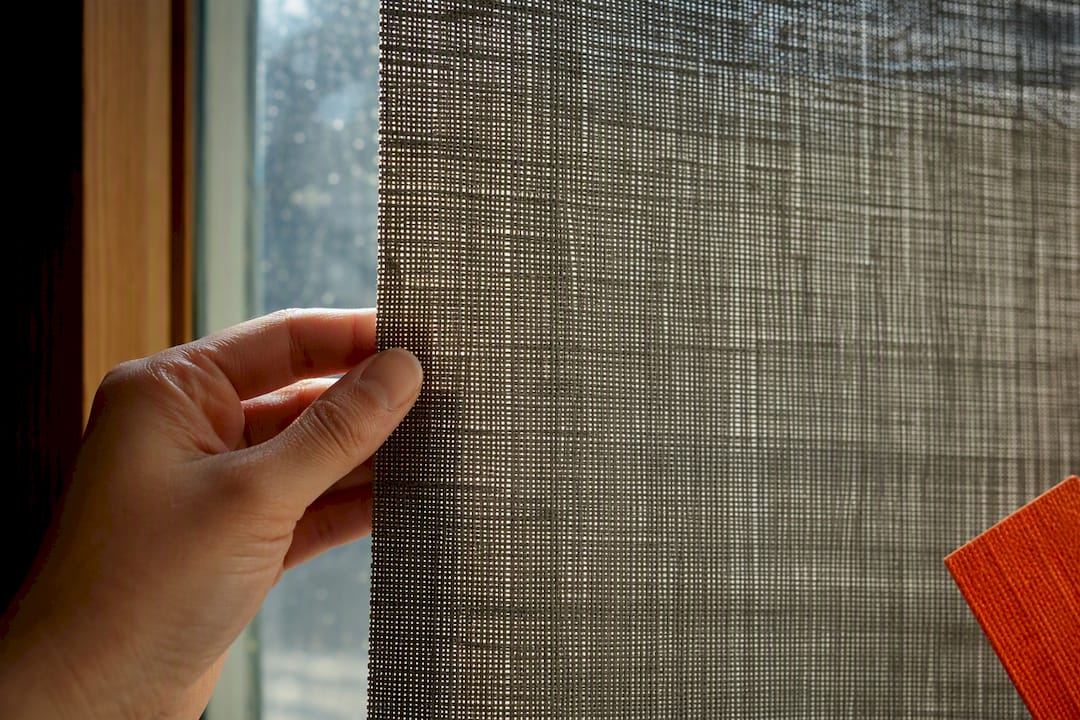
For south-facing exposures, a 1% to 3% openness factor maximizes heat and glare reduction but noticeably darkens both the room and the outward view, according to Blindsgalore's south and west-facing guidance. It's what most installers land on because it balances glare control, heat reduction, and enough visibility to still feel like a window rather than a wall.
Colour matters almost as much as openness:
- Darker fabrics improve outward view clarity and cut perceived glare, since less light bounces back into your eyes off the fabric surface, per Vela Blinds' analysis of south-facing options.
- Lighter fabrics reflect more heat away from the room, which matters more if your priority is temperature over glare.
- Metallized backings add a reflective layer that boosts heat rejection on either colour choice.
Layering beats any single solution on its own. Pairing a sheer solar shade with a blackout roller, or film with an operable shade, consistently outperforms one treatment doing all the work alone.
Getting the mounting and motorization right
Inside mounts look cleaner and sit flush with the wall, but outside mounts with an overlapping valance close the edge gaps that let light leak around the covering, according to JupiterAV's own field notes on motorized blinds costs. If blackout is the goal, outside mount usually wins.
A few hardware details that change performance:
- A cassette or valance headrail seals better than an open headrail, cutting the light gap at the top of the shade.
- Bracket clearance matters on wide windows, where sagging headrails are a common installer callback.
- Battery-powered motors suit smaller windows and retrofits, while hardwired motors are the better call for large arrays or whole-home Alexa and Control4 integration, where reliability can't depend on a battery calendar.
- Cordless and motorized designs are the safer default in homes with young kids or pets, removing dangling cords entirely.
Pro Tip: Scheduling matters as much as the hardware. Shades set to lower automatically an hour before peak afternoon sun catch the heat before it enters the room, not after.
What south facing window blinds actually cost installed
Price ranges vary more by grade and motorization than by brand, and knowing where the jumps happen helps you budget without guessing.
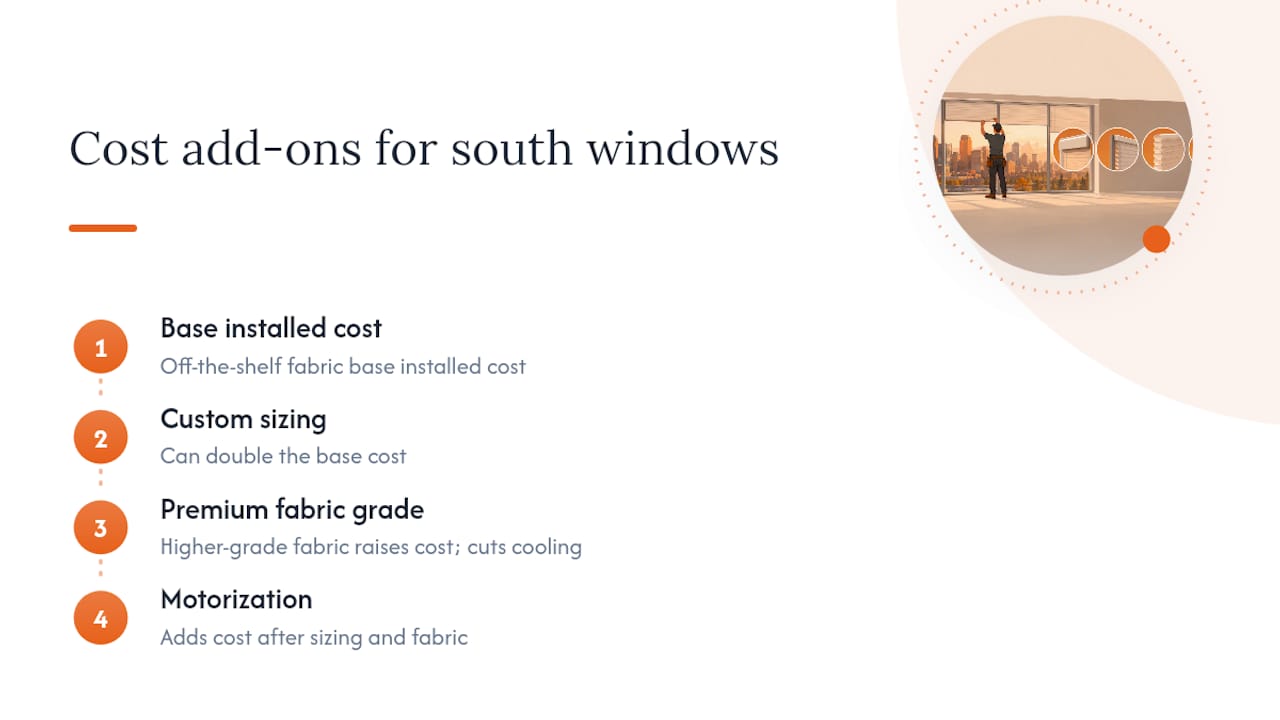
These ranges come from RenoHouse's comparison of film, blinds and shades. Custom sizing, premium fabric grades, and motorization are the three biggest cost drivers, in that order. A large picture window in a custom size can double the base cost of an off-the-shelf fabric choice before motorization even enters the conversation. Spending more upfront on film or better fabric often pays back through lower cooling costs over years of use, especially in a room that bakes all afternoon.
When combining film and shades beats either one alone
Film alone is the right call when preserving the view matters more than anything else, since it works all day without you touching a remote. Shades alone are the right call when you need real nighttime privacy or full blackout, which film can't provide on its own.
Combine them when you need both:
- South-facing condo bedrooms, where daytime heat and nighttime blackout are equally non-negotiable.
- Living rooms with hardwood floors, art, or leather furniture that can't take unfiltered UV exposure all day.
- Large picture windows where fabric alone can't fully control midday heat without blocking the view you paid for.
An experienced installer's take on combining film with motorized shades is that this pairing consistently delivers the strongest overall performance of any single option.
What installers see homeowners get wrong
The most common mistake isn't picking the wrong product. It's buying a cheap blind and expecting it to handle a problem it was never built for, or ignoring openness factor entirely and ending up with a shade that's either too dark or barely helps.
A simple way to decide: pick film first if the view matters most and heat is the main issue. Pick shades first if blackout or privacy comes first. Motorize either one if operating it by hand daily isn't realistic. For anything beyond a standard single window, a site visit catches sizing and mounting issues that a phone quote never will.
— JupiterAV
Get a solar-control plan built around your actual windows
JupiterAV installs and services motorized shades, solar film pairings, and full smart-home integration with Alexa, Control4, and Lutron systems across Calgary, so you're not stuck choosing between a good product and a professional install. Our teams handle the wiring, mounting, and scheduling setup that turns a shade into a system that just runs itself.

Professional installation earns its cost on large windows, motorized setups, and anything tied into whole-home automation, where warranty coverage and correct wiring matter more than a DIY afternoon saves. If you're also tracking indoor comfort, an air quality monitor like the Awair Glow pairs well with a solar-control upgrade to confirm the difference it's actually making. Ready to see what fits your windows? Request a consultation with JupiterAV and get a quote based on your actual glazing, not a generic estimate.
Sources
- Window film vs blinds vs shades — RenoHouse
- Solar Shades | Cordless & Motorized Options | Blindsgalore
- The best window coverings for south-facing homes in Calgary — Sarabella
- What are the best blinds for south-facing windows to stay cool and stylish in 2025? — Vela Blinds