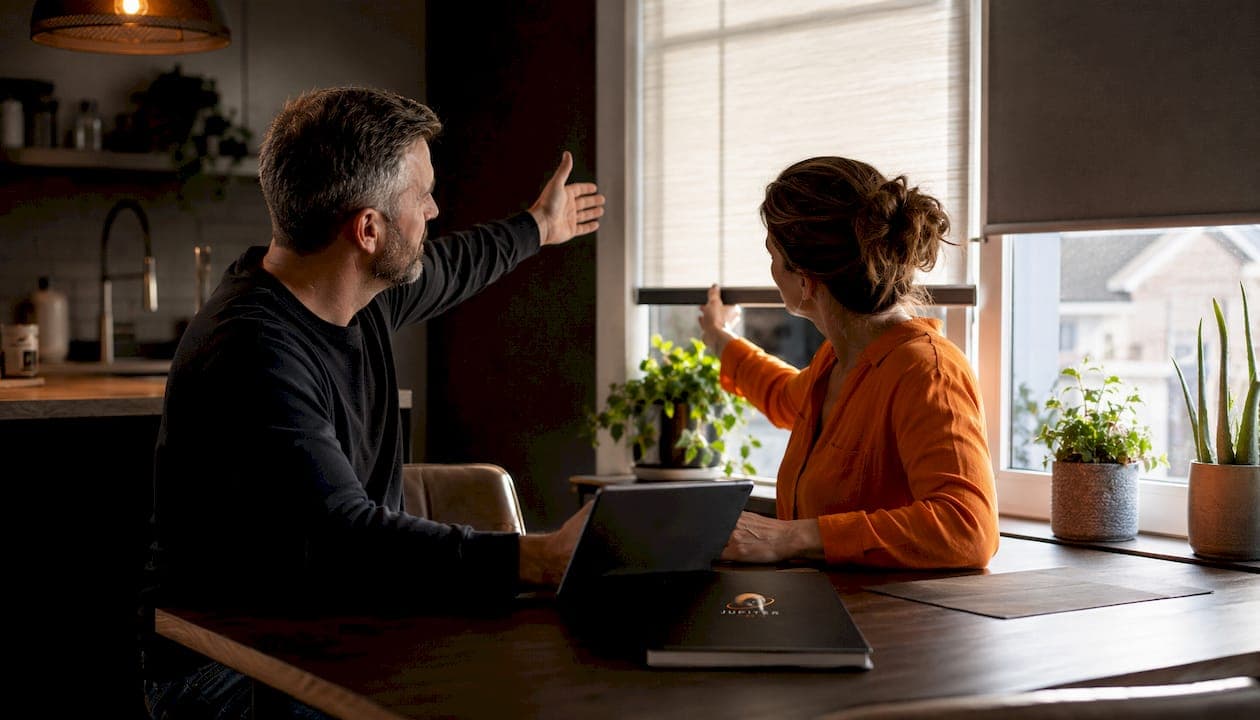
What's the real difference between blackout and light filtering shades?
Blackout shades block almost all incoming light, creating near-total darkness and full privacy around the clock. Light filtering shades let some natural light pass through, softening glare and filling a room with a warm, ambient glow while still providing daytime privacy. That gap in light transmission is what drives every other difference between the two.
Blackout fabrics use dense, tightly woven or coated materials, often with a mylar backing, that stop light from penetrating. They also block UV rays and heat transfer more effectively than light filtering fabrics, which helps keep rooms cooler during peak sunlight hours. Light filtering fabrics, by contrast, use a looser weave or semi-opaque material that diffuses rather than blocks sunlight.
The privacy story changes after dark. Light filtering shades offer solid daytime privacy because outdoor light is brighter than indoor light. Once you turn your interior lights on at night, silhouettes can become visible from outside. Blackout shades eliminate that concern entirely, day or night.
- Light blocking: Blackout blocks 99–100% of incoming light, while light filtering shades allow about 15–25% of natural light through.
- Privacy: Blackout provides 24/7 privacy; light filtering provides daytime privacy only
- UV protection: Blackout blocks nearly all UV rays; light filtering reduces but does not eliminate UV exposure
- Room atmosphere: Blackout creates a dark, enclosed feel; light filtering keeps spaces bright and airy
- Energy efficiency: Blackout fabrics insulate better; light filtering adds some insulation but less
- Best use: Blackout for bedrooms, nurseries, media rooms; light filtering for kitchens, living rooms, offices
Pro Tip: Even the best blackout fabric cannot achieve full darkness on its own. You need professional installation with light gap blockers or side channels sealing the perimeter between the shade and the window frame.
Table of Contents
- How do you choose the right shade type for each room?
- Why professional installation determines how well your shades actually perform
- Which local Alberta providers offer custom blackout and light filtering shades?
- How do you clean and maintain blackout vs. light filtering shades?
- What does it cost to install blackout vs. light filtering shades in Alberta?
- What do customers say about Budget Blinds of Sherwood Park?
- Motorized and smart home integration for blackout and light filtering shades
- Key takeaways
How do you choose the right shade type for each room?
The room's primary function is the clearest guide. Bedrooms, nurseries, and media rooms benefit most from blackout shades because darkness directly supports sleep quality and glare-free screen viewing. Living rooms, kitchens, and home offices tend to work better with light filtering options, where natural daylight improves mood and reduces the need for artificial lighting during the day.
Window orientation matters more than most homeowners expect. West-facing windows take intense afternoon sun, so blackout-level opacity protects against heat and glare during the harshest part of the day. East-facing windows get gentler morning light, making light filtering a natural fit if you want to wake gradually rather than in total darkness.
Privacy requirements also shift the decision. A street-facing bedroom or a ground-floor bathroom calls for blackout coverage regardless of orientation. A second-floor living room with no close neighbours can get away with light filtering shades even in the evening.
- Blackout: bedrooms, nurseries, home theatres, bathrooms, street-facing windows
- Light filtering: kitchens, dining rooms, living rooms, home offices, upper-floor rooms
- Mixed approach: blackout in rest and media spaces, light filtering in social and daytime areas
- Sleep-sensitive households: blackout is the default for anyone who works shifts or is light-sensitive
- Natural light priority: light filtering preserves the connection to the outdoors without harsh glare
Why professional installation determines how well your shades actually perform
The fabric's opacity rating means very little if the installation leaves light gaps. Even the highest-quality blackout materials do not achieve full darkness unless the edges are sealed with light gap blockers or side channels that close the perimeter between the fabric and the window frame. A shade that tests at 99% light blockage in a lab can let in noticeable light in a real room if it is mounted without those seals.
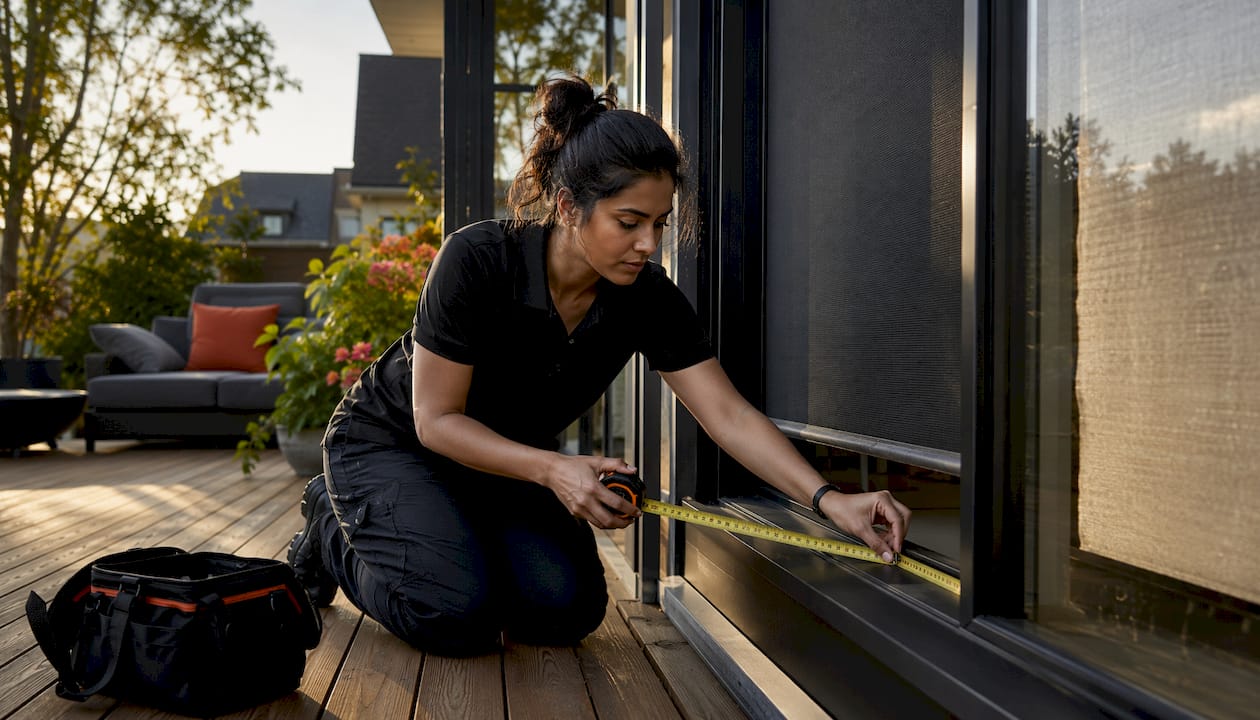
Accurate measuring is the other critical factor. A shade that is even a few millimetres too narrow creates a visible light strip along the sides. Professional installers measure for both inside and outside mount options, account for window depth and trim, and recommend the mounting style that best suits the room's light control goals.
Thermal performance also depends on fit. A well-fitted cellular or honeycomb blackout shade traps air in its cells, reducing heat transfer through the glass. A poorly fitted shade, even in the same fabric, loses most of that insulating benefit because air circulates freely around the edges.
- Light gap blockers: adhesive or channel-based strips that seal shade edges for true blackout
- Inside vs. outside mount: outside mount covers the full frame and reduces edge light; inside mount is cleaner but requires precise depth
- Cellular fabrics: honeycomb construction adds insulation value beyond light blocking alone
- Motorized treatments: require additional wiring or battery planning that a professional installer handles during the initial fit-out
- Consultation first: an in-home measurement visit catches window irregularities that online ordering misses
Pro Tip: When choosing an installer for motorized or smart home integrated shades, confirm they have hands-on experience with the specific motor system you plan to use, whether that is Lutron, Clara, or another platform, before booking.
Which local Alberta providers offer custom blackout and light filtering shades?
For homeowners and businesses in the Sherwood Park and Edmonton area, Budget Blinds of Sherwood Park is the primary verified local option for custom blackout and light filtering window treatments.
| Provider | Service offerings | Consultation options | Installation | Warranty | Specialisations | Rating |
|---|---|---|---|---|---|---|
| Budget Blinds of Sherwood Park | Custom blinds, roller, cellular, woven, Roman, sheer shades, shutters, draperies | In-home or virtual | Professional measuring and installation | Product warranty included | Custom window treatments, residential and community-focused design, motorized integration | 4.7★ (295 reviews) |
Budget Blinds of Sherwood Park carries the backing of the #1 North American provider of custom window coverings, which gives it access to a broad product catalogue spanning blackout cellular shades, light filtering roller shades, and motorized options compatible with smart home systems. The in-home consultation is particularly useful for blackout installations, where accurate measuring and edge-sealing decisions need to be made at the window rather than online.
For homeowners planning a full smart home build or retrofit, the consultation can also address motorized shade integration alongside other automation systems, which is where a provider with both window treatment expertise and smart home knowledge becomes genuinely useful.
How do you clean and maintain blackout vs. light filtering shades?
Blackout shades require more careful handling than light filtering options because their coated or layered fabrics can degrade if cleaned aggressively. Spot cleaning with a damp cloth and mild soap is the standard approach for most blackout materials. Avoid soaking the fabric or using steam, which can separate the mylar or foam backing from the face fabric over time.
Light filtering shades are generally more forgiving. Their looser weave allows dust to be removed with a soft brush attachment on a vacuum, and most semi-opaque fabrics tolerate gentle hand washing or a cool machine cycle in a mesh laundry bag. Check the manufacturer's care label first, since some woven wood or natural fibre options are dry-clean only.
Motorized shades of either type benefit from periodic inspection of the motor housing and battery contacts. Dust accumulation around the motor can affect operation over time, so a quick wipe-down during regular cleaning keeps the mechanism running smoothly.
What does it cost to install blackout vs. light filtering shades in Alberta?
Blackout shades typically cost somewhat more than light filtering options because the additional fabric layers, coatings, and edge-sealing hardware add to both material and labour costs. The price gap between comparable blackout and light filtering styles in the same product line tends to be modest, though it grows when you add motorized operation.
Motorized blackout shades carry a higher upfront cost than manual versions, but the long-term energy savings from improved insulation and the convenience of scheduled operation offset some of that difference over time. For a full room or whole-home installation, getting an in-home quote rather than relying on online estimates gives you a more accurate picture, since window size, mount type, and edge-sealing requirements all affect the final number.
Light filtering shades are generally the more budget-friendly starting point, and many homeowners use them in lower-priority rooms while investing in blackout or motorized treatments where light control matters most.
What do customers say about Budget Blinds of Sherwood Park?
Budget Blinds of Sherwood Park holds a 4.7-star rating across 295 Google reviews, reflecting consistent feedback on its installation quality and in-home consultation process. Reviewers frequently mention the professionalism of the measuring and installation visits, and the ability to see fabric samples in the actual room before committing to a product.
The virtual consultation option has drawn positive attention from customers who prefer to start the process remotely before scheduling an in-home visit. For motorized and smart home integrated treatments, customers note that the local team can advise on compatibility with existing automation systems, which reduces the back-and-forth that often comes with online-only ordering.
Motorized and smart home integration for blackout and light filtering shades
Motorized window treatments take the practical benefits of both shade types and add a layer of control that manual operation simply cannot match. With remote operation, scheduling, and voice commands, you can set blackout shades to close automatically at sunset in a nursery or program light filtering shades to open gradually each morning in a home office, without touching them.

JupiterAV installs and integrates Lutron and Clara motorized blinds across Alberta, connecting them directly to smart home ecosystems including Alexa, Control4, and Lutron Caseta. That means your blackout shades in the home theatre and your light filtering shades in the living room can operate on the same schedule, respond to the same voice command, or adjust automatically based on time of day or sensor input. For outdoor motorised blinds that extend your light control to patios and covered decks, motorized options follow the same integration logic.
The energy efficiency case for motorized shades is real. Blackout shades scheduled to close during peak afternoon heat reduce cooling load without requiring anyone to remember to do it manually. Light filtering shades set to open at sunrise reduce morning lighting costs. Reviewing motorised curtain providers can help you compare automation features before committing to a system.
JupiterAV handles the full scope: product selection, low-voltage wiring, motor installation, and smart home programming, so your shades work as part of a connected home from day one. Get in touch with JupiterAV at jupiterav.ca to book a consultation for your Alberta home or business.
Key takeaways
Blackout shades deliver near total darkness and full privacy, while light filtering shades preserve natural daylight and daytime privacy, and professional installation determines how well either type actually performs.
| Point | Details |
|---|---|
| Light blocking levels | Blackout blocks 99–100% of incoming light; light filtering allows about 15–25% of natural light through, creating a soft glow. |
| Room matching | Use blackout in bedrooms, nurseries, and media rooms; use light filtering in kitchens, living rooms, and offices. |
| Installation matters | Light gap blockers and accurate measuring are required to achieve true blackout performance. |
| Cost and energy | Blackout shades cost more upfront but provide better insulation and long-term energy savings. |
| JupiterAV integration | JupiterAV installs and programs Lutron and Clara motorized blinds with full smart home integration across Alberta. |